The Eternal City of Light, Shiva and Liberation
Kashi—a city in the Hindu spiritual imagination, is not merely a geographical place but a sacred reality. Known today by three names— Kashi, Banaras and Varanasi —this ancient city on the banks of the Ganga occupies a unique position in Sanatana Dharma. Kashi, derived from the Sanskrit root kash, “to shine,” and therefore understood as the City of Light—not merely the light of the sun, but the inner light of knowledge that dispels ignorance. It is called Varanasi because the sacred region is traditionally understood as lying between the rivers Varuna in the north and Asi in the south. “Banaras” or “Benares” is the popular historical form of the city's name.
According to the Kashi Khanda of the Skanda Purana, Kashi rests directly on the Trishula (Trident) of Lord Shiva .
Kashi is described as the Avimukta Kshetra - the place that is never forsaken, the sacred land that Lord Shiva never abandons. This is why the spiritual tradition does not regard Kashi as merely an ancient city. It regards it as a Sanctuary of Consciousness .
Spiritual Importance in Hindu Mythology
In Hindu cosmology, Kashi holds the supreme position among the Sapta Puri (seven holy cities granting liberation).
- The Gateway to Moksha (Liberation): It is believed that anyone who dies within the sacred boundary of Kashi attains Moksha—liberation from the endless cycle of birth and death (Samsara). According to legend, at the moment of death, Lord Shiva himself whispers the Tarak Mantra ("the mantra of crossing over") into the ear of the departing soul, instantly liberating them so Kashi is identified as Mokshapuri.
- The Seat of Vishwanath: As the abode of Lord Kashi Vishwanath (the Lord of the Universe), the city acts as a spiritual magnet. It is also a revered Shakti Peetha (Vishalakshi Temple) and the realm of Annapurna Devi, the goddess of nourishment, ensuring that no soul in Kashi goes hungry, spiritually or physically.
- Vishnu’s Tapasya Land: Before Shiva made Kashi his permanent residence, Lord Vishnu performed intense austerities (tapasya) here. He excavated the Manikarnika Kund with his Chakra and filled it with his perspiration. Shiva was so pleased by Vishnu's devotion that his earring (Manikarnika) fell into the pool, giving the sacred ghat its name.
Kashi Through the Four Yugas
The nature and predominant manifestation of Kashi evolved dynamically across the four cosmic ages (Yugas):
Kashi in Satya Yuga – The City of Tapasya and Knowledge - Anandavana
Kashi in Treta Yuga – The City of Dharma and Yajna - Avimukta Kshetra
Kashi in Dvapara Yuga – The City of Dharma, Bhakti and Sacred Memory Mahashmashana
Kashi in Kali Yuga – The City of Liberation - Kashi / Rudravasa
The Sacred Division of Kashi: The Three Khandas
The Kashi Khanda classifies the sacred space of Varanasi into three distinct geographic and spiritual sectors, known as the Three Khandas.
These three sectors mirror the three prongs of Shiva’s trident and represent the cosmic cycle of Creation, Preservation, and Dissolution.
1. Omkara Khanda (The Northern Sector)
- Cosmic Symbol: Srishti (Creation)
- Key Temples & Landmarks: Omkareshvara Temple, Trilochan, Adi Keshava (where the Varuna River meets the Ganga).
2. Vishweshwara Khanda (The Central Sector)
- Cosmic Symbol: Sthiti (Preservation & Governance)
- Key Temples & Landmarks: Kashi Vishwanath Temple, Annapurna Temple, Manikarnika Ghat, Sakshi Vinayaka.
3. Kedara Khanda (The Southern Sector)
- Cosmic Symbol: Samhara / Laya (Dissolution & Liberation)
- Key Temples & Landmarks: Kedaresheshvara Temple, Harishchandra Ghat, Asi Ghat.
The three Khandas—Omkara, Vishweshwara and Kedara—can therefore be understood not merely as geographical divisions but as three interconnected expressions of the sacred presence of Shiva. Scholarly descriptions of Kashi's sacred geography identify these three fields within the innermost sacred region, arranged symbolically in relation to Shiva's Trishul.
Why the Ganga Is Different in Kashi
If Shiva is the soul of Kashi, then Ganga is its living breath.
While the River Ganga is revered throughout her 2,525 km course, her character and spiritual orientation undergo a dramatic transformation upon entering Kashi.
- Uttaravahini (North-Flowing Direction): Throughout India, the Ganga flows southwards toward the ocean. But at Varanasi, the river takes a distinct crescent-shaped bend and turns northward (Uttaravahini) back toward her source in the Himalayas (Mount Kailash, the abode of Shiva). Spiritually, this northward flow symbolizes the reversal of the worldly cycle—turning the soul's direction away from material attachment (Samsara) back toward supreme consciousness.
- The Crescent Moon Shape (Ardhachandra): The riverfront bends in the exact shape of a crescent moon, reminiscent of the Chandra adorned on Lord Shiva’s matted locks. This natural topography allows all 84+ ghats to face east toward the rising sun, allowing daily Surya worship (Surya Arghya) directly into the holy waters.
The river therefore does something extraordinary in Kashi: Ganga turns toward Shiva's city and embraces it.
The Ghats: Where Ganga Meets the Spiritual Life of Kashi
The famous ghats of Kashi are more than architectural steps leading into the river. They form a continuous sacred theatre in which every aspect of human existence is performed before Ganga.
At Assi Ghat, the southern end of the sacred riverfront, the Assi meets the Ganga and the city begins its journey toward its northern sacred boundary.
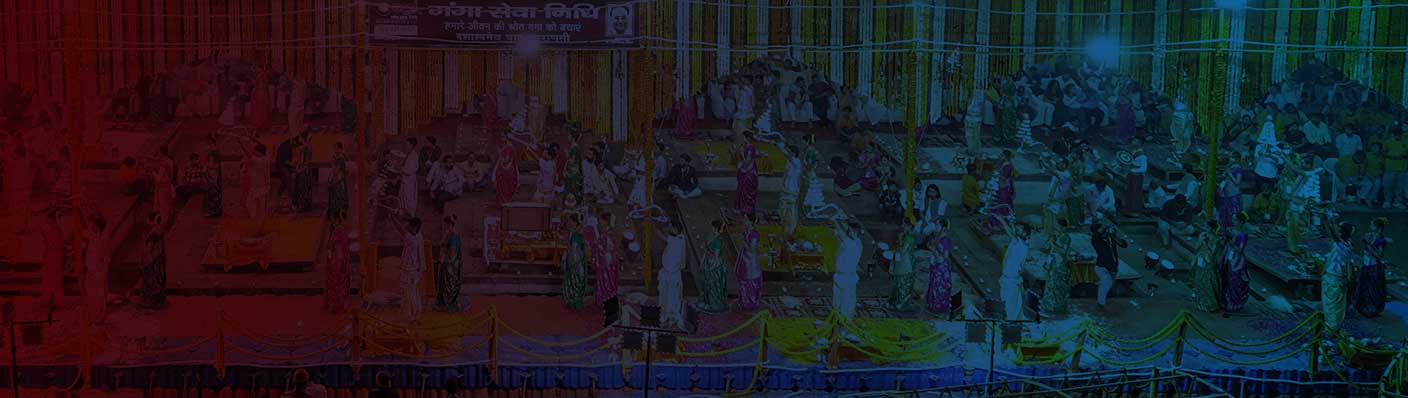
At Dashashwamedh Ghat , the river becomes the centre of evening worship as lamps, mantras, bells and conch shells rise in the Ganga Aarti, transforming the riverfront into a luminous offering to Maa Ganga.
At Manikarnika, Ganga witnesses the final rites of human life.
At Panchganga Ghat , the visible Ganga is traditionally associated with the mystical presence of four other sacred rivers—Yamuna, Saraswati, Kirana and Dhutapapa—making it a powerful symbol of sacred confluence.
Thus, along a single riverfront, one can encounter birth, worship, learning, music, meditation, celebration, pilgrimage and death .
This is what makes the Ganga in Kashi spiritually different.